

Castell de Montjuïc
Spectacular view over Barcelona, the port and the sea
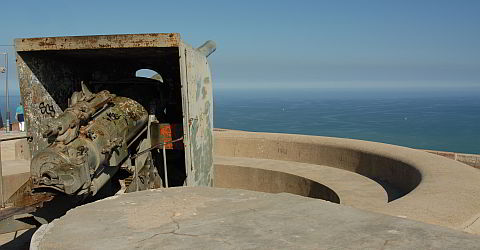
The Castell de Montjuïc is located on the summit of the 173 meter high local mountain Barcelonas of the same name. From there you have a magnificent view of the sea, the harbor and the city.
Content of This Page
The large defense system was built in today's form at the end of the 18th century, but its history of origin dates back to the 15th century.
You can spend a whole day on Montjuïc: If you hike around the Castell, enjoy the view or visit a lot of exciting sights that the mountain offers.
The Castell de Montjuïc today
Until 1960 the Castell was a military prison before it was handed over to the city. Parts of it were used militarily until the 2010s. Today there is a traffic training area for school children on the former military site.
Interesting things about visiting the Castell de Montjuïc
As a symbol of oppression, the Castell was restored to the 1992 Olympic Games and largely made accessible to the public.
The ordinance for the transfer of the Castell to the city was expanded in 2007 and on June 15, 2008 the Castell was officially handed over to the city as a cultural center. On this day, 40,000 people visited a concert in Ehren Lluís Companys and Francesc Ferrer I Guàrdia.
Concerts, seminars and exhibitions take place regularly on the Castell today and it is a very popular destination, especially because of the unique view of the city of Barcelona, ââthe sea and the harbor.
Even if we recommend going around the fortress and enjoying the view from different viewpoints, entering the Castell is worthwhile because of the 360 ââ° panorama alone, which you can experience on the roof and tower at the top.
Despite the lightness that the wonderful view offers and the joy that the many concerts and cultural events today prepare people, you should also be aware that the Castell is also a dunning. You can visit the sites where incredibly cruel things happened during the Franco period. You can still find the traces of the shootings on some walls.
The History of Castell de Montjuïc
For many years it was a military prison symbol of suppression by the Franco regime. In 1960, the Castell de Montjuïc was handed over to the city. Today it houses the Military History Museum and is a popular attraction on the Montjuïc.
Castell de Montjuïc
The Reaper Revolt (Guerra dels Segadors) 1640 to 1659
The city was dominated militarily from the Montjuïc. That is why in 1640 a medieval fortress was built on the Montjuïc. The occasion for the construction of the castle was the beginning of the Reaper Revolte on Corpus Christi Day (June 7, 1640), in which the viceroy was murdered. The real reason for the revolt of the peasants and harvest workers (Reapers) against the Castilian King Felipe IV was the stationing of Castilian troops and oppressive feudal loads during the Franco-Spanish clashes during the Thirty Years' War. The conflict against the Spanish king continued beyond the end of the Thirty Years' War.
The first, Castell, built in 1640 in only 30 days, was a quadrangular fortification of stones and clay. The fortress was first tested during the Battle of Montjuïc on January 26, 1641, when the Castilian troops were defeated under Fajardo Pedro de Requeséns-Zúñiga y Pimentel, the Marquis of Vélez.
The Catalan General Assembly then elected Louis XIII. from France to the Count of Barcelona and thus the ruler of all of Catalonia. In the Pyrenees peace in 1659 France gave up on Catalonia, Roussillion in today's southern France however fell to France.
In 1694, it became a castle, but the fortress walls were strengthened.
The Castell During the War of Spanish Succession (1701-1714)
On 17 September 1705, the Castell was handed over to Charles Mordaunt, Lord of Peterborough. He commanded the English troops on behalf of Queen Anne. The way was to be paved for the Archduke Karl of Austria on the Spanish throne.
The Castilian king Felipe V. hovewer took the fortress back on 25 April 1706, but lost it again on 12 May of the same year. On September 11, 1714 (now Catalan national holiday), Barcelona and the Castell, some time after the end of the Spanish War of Succession, were occupied by the Bourbons.
Construction and Extension of the Castle to Today's Form
In 1751 the engineer Juan Martín Cermeño had orders to destroy the old fortress of 1640, which stood within the present plant. He rebuilt the complex, the castle was given the present form with a large ditch towards the city and huge zigzag ramparts facing the sea. Also a cistern for the drinking water supply was created. Between 1779 and 1799, the facility was expanded to provide space for the over 3,000 people who lived there. The Castell also received 120 artillery guns.
The Castell de Montjuïc as a Military Prison and Instrument of Oppression
The Napoleonic troops took the Castell without a fight on February 25, 1808. In December 1842, the Spanish regent Joaquín Baldomero Fernández Espartero Álvarez de Toro bombarded the city of Barcelona to quell an uprising against his free trade policy.
On 13 October 1909, the founder of the Escuela Moderna, Francesc Ferrer i Guàrdia, was executed in the Castell de Montjuïc. He was accused of preparing the assassination of King Alfonso XIII. The reform pedagogical concepts of the modern school, which he founded, were oriented towards anarchism.
In 1919, more than 3,000 workers were imprisoned in the Castell during the so-called Canadenca conflict, a strike that paralyzed all public services.
The Castell de Montjuïc became a symbol of oppression at the time of the Spanish Civil War and the time under Franco. Between 1936 and 1938 alone, 173 people were executed, the president of the Generalitat de Catalunya, Lluís Companys, on October 15, 1940 was one of them.
How to get up to the Castell de Montjuïc
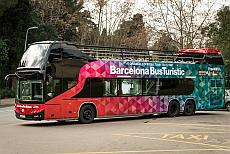
The Castell can be reached by bus Turístic and onward journey of Telefèric, on foot, by bike, by bus, with the Aeri cable car and a footpath and even by car.
With the Telefèric cable car and Bus Turístic or the Funicular
A journey with the Telefèric de Montjuïc cable car is certainly the most comfortable and most beautiful way to get to the Castell. The mountain station is only a few meters from the fortress.
When you come with the hop-on hop-off-bus "Bus Turístic", switch to the cable car at the "Telefèric de Montjuïc" station. If you arrive on the subway, switch into the Funicular de Montjuïc cable car in the metro station Paral·lel. At their mountain station you can also switch directly to the Telefèric.
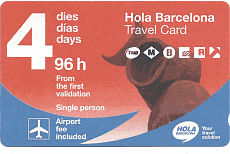
You need the following tickets: Telefèric, Bus Turístic or Hola BCN or Barcelona Card.
On foot up
Basically, there is a simple directions: walk upwards. Signs that show them the right path are common. In some places the footpath is quite steep, inexperienced walkers can get out of breath. There are two good places to start the climb:
- From the valley station of the Telefèric / Funicular mountain station: The footpath lasts about 20-30 minutes. The route leads through various gardens.
- From the mountain station of the Aeri cable car: This climb also takes about 20-30 minutes, the paths are signposted. However, this path is not quite as beautiful as the first-mentioned footpath.
By bike to the Castell de Montjuïc
A precise directions are not necessary for this: simply drive up the mountain, the Castell is signposted. At the top of the Santa Amàlia bastion, bicycle stands are available on the sea side. Please note that visitors are not allowed to move around the Castle on any wheeled-mobility system (this is how the ban is actually described). So you are not allowed to drive around the castle with anything that has wheels. The exception are wheelchairs.
Why visiting the Castell
The Castell should not be considered detached from Montjuïc. The Montjuïc mountain is a great urban park, which, in addition to a lot of green, also offers a lot of culture and pleasure. You can walk around the Castell, while this about one-hour walk you can see the city of Barcelona, the sea, the Conserolla massif, to the airport and the harbor at several viewpoints.
The great thing about the Castell is: If you are on the roof or tower, you can turn once and enjoy the whole view of once. A wide variety of exhibitions that are included in the ticket price and regularly concerts take place in the Castell itself.
Book here tickets for the Castell
- Bus Turístic: come to the Montjuïc
- Telefèric: ticket for the cable car to the Castell
- Cable car to the Castell de Montjuïc
Important information

Surroundings
Find Hotels nearby
Address
Avinguda del Castell
ajuntament.barcelona.cat/castelldemontjuic/en
Arrival
Metro: Paral·lel, Funicular (L2, L3)
Bus Turístic: Télefèric de Montjuïc, weiter mit der Seilbahn
Parking nearby
Opening times
1 Nov. - 28 Feb.: 10.00 - 18.00
1 Apr. - 31. Oct.: 10.00 - 20.00
Open daily
Closed: 1 Jan. and 25 Dec.
Admission
General €5.00
Reduced: €3.00 (people 16 to 29 years, 65+, owner of the Barcelona Card Express)
Free admission: children under 16 years, Barcelona Card owners
Free admission 1st Sunday a month, Sundays from 15.00
Tips for the visit of the Castell de Montjuïc
Also without paying admission, you can enjoy the beautiful view over Barcelona, the harbor and the sea: a hiking path leads around the castle and you can then hike downhill to the Font Magica.
Book your accommodation in Barcelona here! All categories.
1-5*-hotel rooms, apartments, hostels.