
Barcelona`s history
History of Barcelona from Roman times to the present day
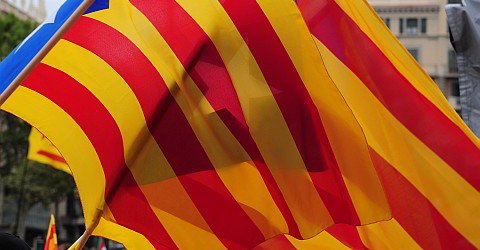
The settlement history of Barcelona starts in the 2nd century BC with Barcino, the largest known Roman village outside Rome. But the Gothic and the time of Modernism have left their traces still visible today as well. The legacy of the dreary time of the Franco dictatorship has fortunately eliminated.
The history of Barcelona is also characterized by the quest for independence and maintaining their own cultural identity.
2nd century to 3rd century AD - Roman domination
Roman domination. In the 1st century BC the colony Barcino arose to today's Barcelona.
5th century - Visigoths
Immigration of the Visigoths. Barcelona becomes the capital of the empire of the Visigoths.
8th century - the moors
The Moors conquered Catalonia. The influence in the present day is not as great as in southern Spain.
801 - the Franks
Barcelona is occupied by the Franks. Emperor Charles the Great makes Barcelona the capital of the Spanish Mark, which serves as defence for the Frankish Empire against the empire of the Moors, that occupied the remaining Spain.
988 - declaration of autonomy
The county of Barcelona is declared autonomously by Borell II. Thus the independence of France’s kingdom begins.
1137 - federation with Aragon
The marriage of Berenguer IV, the Catalan count of Barcelona with the throne of Aragon, Petronilla, the Catalan-Aragonese Federation arises. This extends their power range up to Naples and Sardinia.
1213-1276 - economic expansion
Reigned by Jaume I. Successful economic expansion of Barcelona. Reconquest of the Balearic Islands, Valencia, Menorca and Mallorca from the Moors.
1347 - costruction of the cathedral
Start of construction of the cathedral. This lasts over 400 years.
1469 - recapture of Grenada
Fernando II of Aragon's and Isabella of Kasilien's wedding. The association of Christian kingdoms leads in 1492 to recapture of Grenada, the last Muslim bastion on the Iberian Peninsula. However the influence of Barcelona is waning.
1640-1659 - Reapers' War (Guerra dels Segadors)
The occasion for the revolt of the farmers and reapers was the murder of the vice king on Corpus Christi day, June 7, 1640. The actual reason were the ongoing feudalistic burdens put on the Catalans by the Castilian king Felipe IV. The Catalans had to supply to the Spanish troops that were stationed in Catalonia during the Spanish-French conflicts of the Thirty Years War. The conflict with the Spanish king lasted beyond the end of the Thirty Years War. The song Dels Segadors describes the revolt and has become the Catalan national anthem, today in a slightly shortened version. At the beginning of the revolt, the Castell de Montjuïc was erected. On January 26, 1641, the Castilian besiegers were beaten in the Battle of Montjuïc.
The Generalitat proclaimed Louis XIII of France as Count of Barcelona and thus ruler over all of Catalonia. In the Treaty of the Pyrenees, France renunciated the county of Catalonia, but Roussillion, in today's south of France, fell to the French. This resulted in the separation of Catalonia which still goes on today.
1701-1714 - Spanish war of succession
Spanish war of succession. The Catalans support the Habsburgs. On 11 September 1714 is the day to surrender. As a result, Catalonia loses its self-government and many special rights. The day of capitulation today is a national holiday.
1808-1814 - Napoleon
Napoleon's troops destroy large parts of the city during the Spanish War of Independence.
Middle of the 19th century - Renaixença
So-called Renaixença (renewal). The National awareness of the Catalans lives. Barcelona is the most important industrial city in Spain.
1888 - 1st World Excibition
The first World Exposition held in Barcelona on the floor of the former citadel.
1914 - Catalan provincial government
A Catalan provincial government is proclaimed, which is abandoned in the 1925 by the military dictatorship.
1929 - 2nd World Exhibition
The second World Exhibition in Barcelona is on Montjuïc.
1932 - autonomy status
Catalonia has autonomy status. The 1936 to 1939 Spanish civil war ends the Catalan autonomy.
1939 - repression of Catalonia
The President of the general officers is executed by Franco. The Catalan way of life and language will now be brutally repressed.
1977 - demonstration of 1.5 Million
On 11 September 1977, the anniversary of the defeat in the war of succession 1714 and the related loss of independence was held in Barcleona the largest demonstration, which Europe had ever seen until then. Since 1939, it was banned under Franco, to celebrate the so-called Diada. Without great organised calls 1.5 million people poured in the Passeig de Gracia and demonstrated peacefully and in the absence of any police to the autonomous status and against a centralised government, nor held responsible for the persecution and oppression.
1979 - autonomous region
Catalonia is an autonomous region.
1986 - Spain enters the EU
Spain enters the EU. With the announcement of Barcelona as a venue for the Olympic Summer Games in 1992 a strong construction starts.
1992 - Olympic summer games
In the Year of the 500th anniversary of the discovery of America by Columbus Barcelona XXV. Olympic Summer Games are held in Barcelona. This has given the urban development a positive and visible pulse.
2004 - declaration as a bullfighting-free zone
Barcelona is declared as a bullfighting-free zone by the city administration. However, with no legal consequences: every Sunday at 19:00 this gruesome spectacle takes place in the bullring.
July 28, 2010 - bullfighting is banned
The corrida, the traditional Spanish bullfighting is banned in Catalonia, closing down the only bullring in Barcelona. Starting in 2012 there are no more bullfights allowed in Catalonia. The Catalan Parliament has voted a ban - with a large majority - on the perceived by many seen as cruel spectacle. Opponents of the ban see it as a revenge against the Spanish Supreme Court, which declared in a ruling some autonomy to be invalid.
On 25 September 2011, with the end of the season, the last bull was killed at a bullfight in Catalonia.
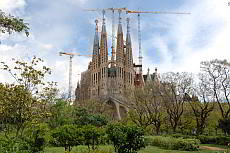
November 07, 2010 - inauguration of the Sagrada Familia
Pope Benedict XVI. inaugurates the Sagrada Familia. The church building is raised to a basilica.
11.09.2012 - demonstrating for the Catalonian independence
About 1.5 million peoble are demonstrating for the Catalonian independence.
Book here tours and tickets around Barcelona's history
Els Segadors, from 1640 the Catalan national anthem.
Text of the Catalan national Anthem
Current original
Catalunya triomfant
tornarà a ser rica i plena!
Endarrera aquesta gent
tan ufana i tan superba.
Chorus:
Bon cop de falç, bon cop de falç
defensors de la terra, bon cop de falç!
Ara és hora, segadors!
Ara és hora destar alerta!
Per quan vingui un altre juny
esmolem ben bé les eines!
Chorus
Que tremoli lenemic
en veient la nostra ensenya.
Com fem caure espigues dor
quan convé seguem cadenes!
Chorus
English translation
Catalonia triumphant
shall again be rich and bountiful.
Drive away these people
Who are so conceited and so contemptful.
Chorus:
Strike with your sickle! Strike with your sickle.
Defenders of the land!
Strike with your sickle!
Now is the time, reapers.
Now is the time to stand alert.
For when another June comes,
Let us sharpen our tools well.
Chorus
May the enemy tremble,
upon seeing our symbol.
Just as we cut golden ears of wheat,
when the time calls we cut off chains.
Chorus
The Catalan quest for independence
The conflict between Catalonia and the centralist state or the Spanish crown has been going on since the 30-year war. On September 11, 1714 or after the completion of the formal peace treaties after the War of Spanish Succession 1701-1713 Barcelona lost his self-government and many special rights. This was followed by times of oppression and exploitation, while the Franco dictatorship had peaked. Even in the private sector, the Catalan language was forbidden.
The current struggle for independence are also economically motivated: many Catalans see it as unfair that Spain's strongest economic region has to make billions of euros in transfer payments to Madrid without getting anything in return. The Catalonian budget is burdened by heavy debt. On September 11, 2012, about 1.5 million people demonstrated peacefully for independence.


Book your accommodation in Barcelona here! All categories.
1-5*-hotel rooms, apartments, hostels.